

Burgundy is often grouped with other dark colors, but it behaves differently on the body. It absorbs light instead of reflecting it, carries warmth without brightness, and creates a heavier visual presence than most neutrals.
This guide looks at how fabric surface, metal finish, lighting, and placement affect jewelry choices when wearing a burgundy dress.
Burgundy Dress Jewelry Selector
| Dress condition | Jewelry choice | Reason |
|---|---|---|
| Warm burgundy under indoor or evening light | Yellow gold or antique gold | Warmth aligns without flattening depth |
| Cool burgundy in daylight or sharp tailoring | White gold or soft silver | Cooler metal preserves edge definition |
| Heavy or matte fabric (velvet, crepe, wool) | Brushed metal or pearls | Matte surfaces prevent harsh glare |
| Smooth or reflective fabric (satin, silk) | Polished metal | Matching reflectivity maintains structure |
| High or closed neckline | Earrings or cuffs only | Neck area already carries visual density |
| Open neckline (V, wrap, strapless) | One short necklace or pendant | Restores vertical structure |
| Gemstone accent planned | Garnet, onyx, emerald kept small | Depth-matched, non-diluting |
Surface Match First
With burgundy, surface mismatch is the most common failure point.
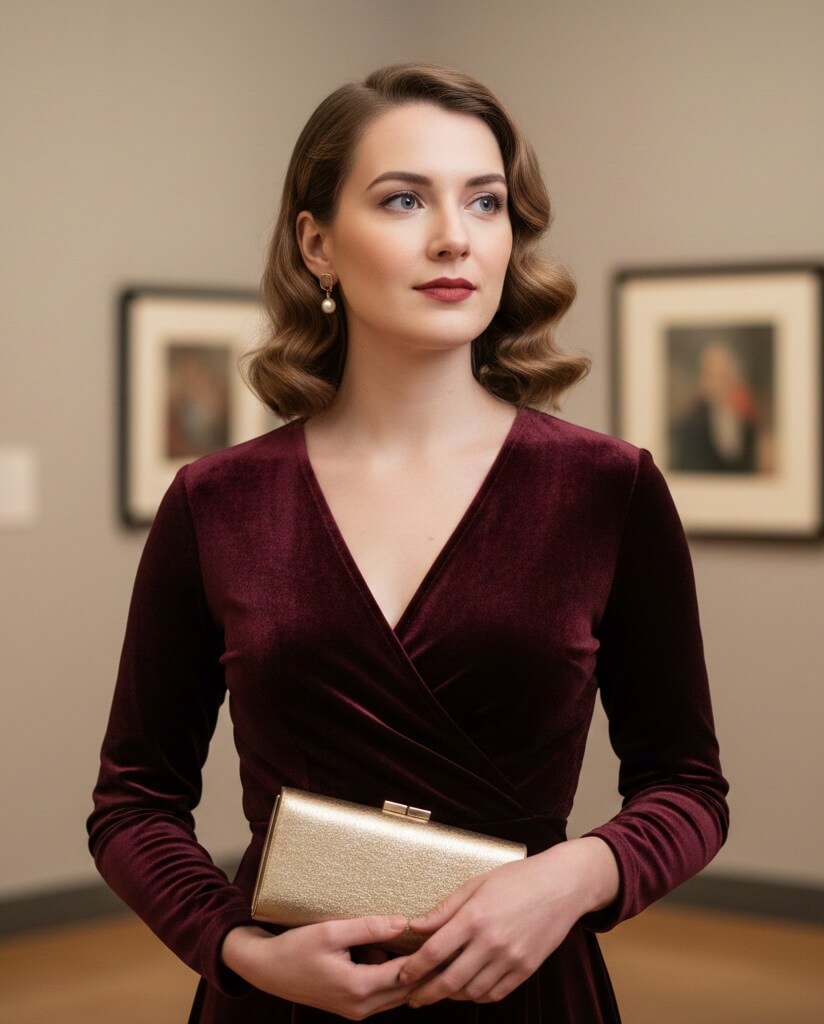
Matte and textured fabrics absorb light. When reflective jewelry is placed against them, the metal flashes unnaturally and appears detached from the dress. This creates the impression of a separate accessory rather than a unified look.
Smooth fabrics reflect light evenly, but muted or brushed jewelry placed against them loses definition and can appear flat or unfinished.
For this reason, finish must be resolved before color. When surface behavior aligns, jewelry reads as intentional. When it does not, even the correct metal color fails. Surface alignment is not a styling preference but a visual requirement.
Metal Base Selection
Once surface behavior is aligned, metal choice becomes controlled. While skin undertone is a traditional factor in metal selection, with burgundy it rarely overrides the dominant behavior of the fabric and the surrounding light.
Gold jewelry works when burgundy reads warm, which is common under indoor lighting. In these conditions, gold supports the depth of the dress rather than competing with it. Softer gold tones integrate best with heavier fabrics, while polished gold holds its shape on smooth surfaces.
White metals function differently. They succeed when the burgundy leans cooler, the cut is modern, or the environment sharpens contrast. White gold and restrained silver maintain clarity without introducing warmth where it does not belong.
Pearls operate outside the metal spectrum. They scatter light softly instead of reflecting it. This makes them effective with burgundy because they lift the look without adding another strong color or shine source.
Rose gold is often suggested, but it introduces a pink shift. That shift pulls burgundy toward red and reduces its depth, which is why rose gold frequently weakens the overall result.

Gemstone Saturation Control
Burgundy already carries saturation weight. Jewelry should not add another dominant color unless it is tightly controlled.
Gemstones succeed only when they fall into one of two categories.
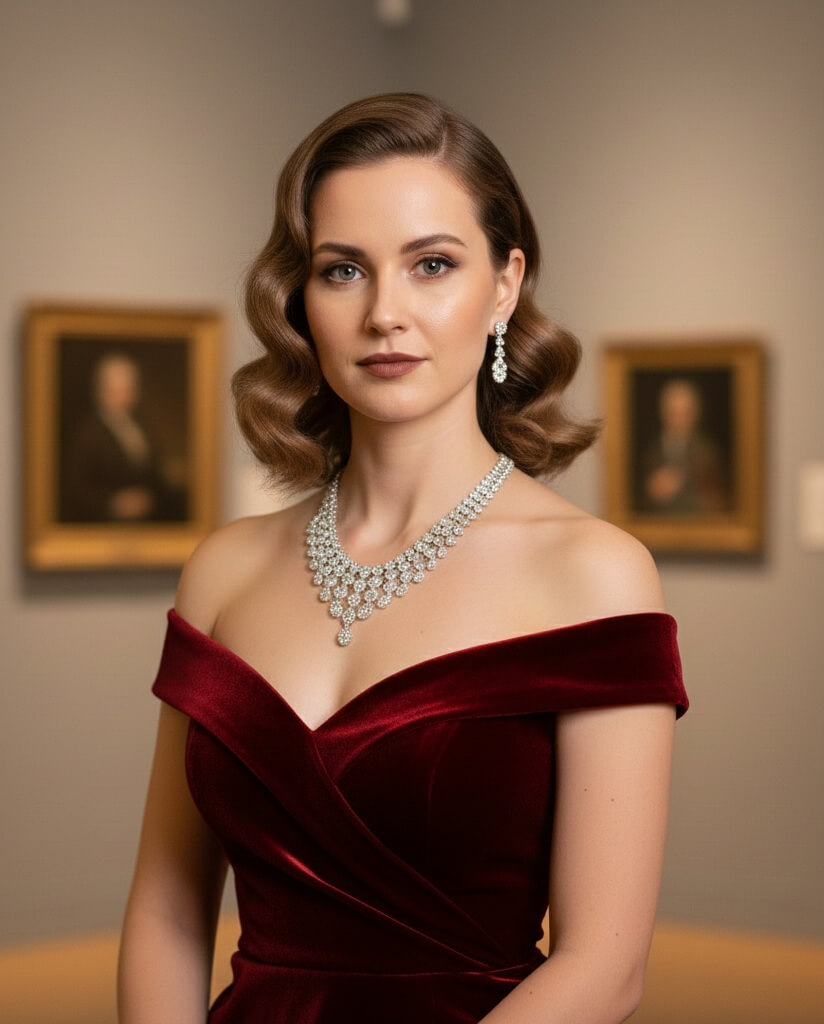
Depth-matched stones, such as garnet or onyx, integrate because they share a low light value with burgundy. Light-neutral stones including pearls and clear stones separate cleanly because they add brightness without hue.
The critical distinction is garnet versus ruby. Garnet contains brown warmth that aligns with burgundy’s base. Ruby introduces a pink brightness that often clashes when the colors appear similar.
Size matters as much as color, because saturation multiplies with scale. Burgundy tolerates restraint far better than emphasis, which is why a small stone works where a large one overwhelms.
Placement and Lighting
Jewelry placement is governed by geometry, not taste.
High or closed necklines create a dense upper block. Adding jewelry in that space compresses the look and removes clarity. Visual weight must move outward, to the ears or wrists, where it can balance the dress instead of crowding it.
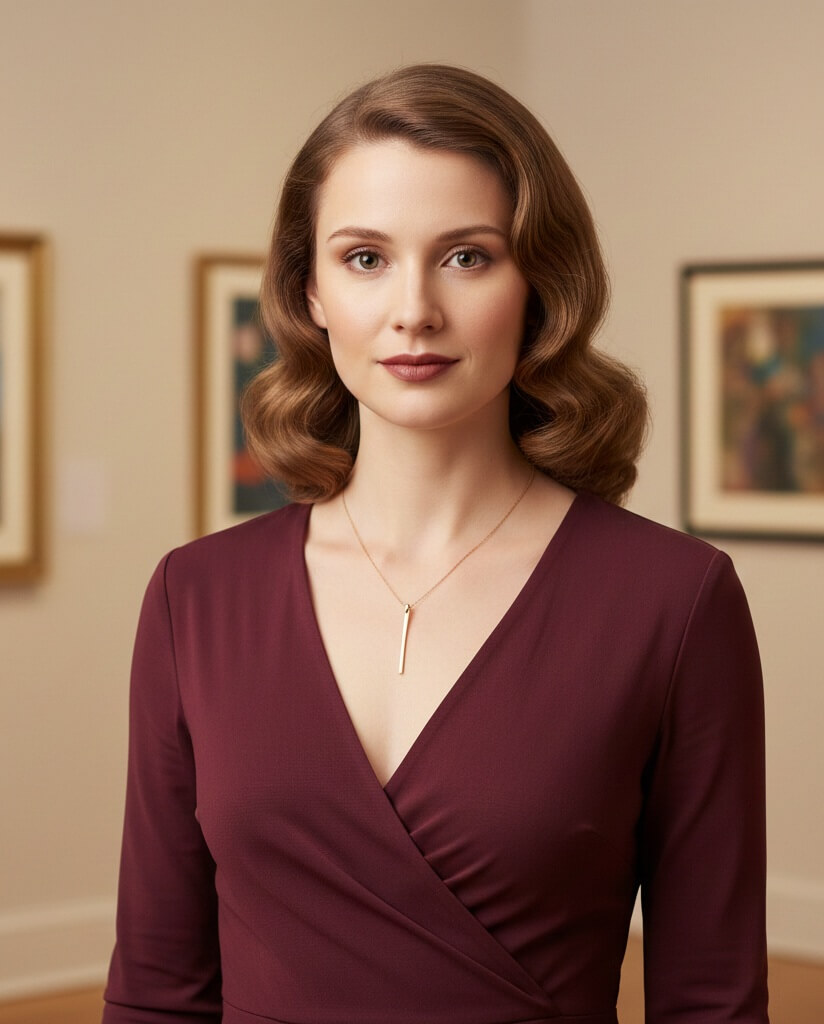
Open necklines create negative space, and jewelry placed there must restore structure rather than fragment it. One clear line stabilizes the opening, while multiple pieces break it apart.
Light changes how burgundy reads, warming under indoor conditions and cooling in daylight. Flash photography exaggerates contrast and can cause reflective metals to dominate unexpectedly.
Mirrors are unreliable because they rarely replicate event lighting. Accessories should be chosen for where they will be seen and photographed, not where they are tried on.
Final Selection Rule
Use this sequence every time:
- Identify how the burgundy reads in real lighting
- Match jewelry finish to fabric surface
- Respect neckline boundaries before adding pieces
- Limit saturation to one dominant element
When these steps are followed, jewelry color becomes a consequence, not a question, and the dress retains its depth and control.
Further reading